A commercial steviol glycoside has three layers: the glycoside components are the active material, everything outside them determines purity and flavour, and fillers added for handling convenience are not active material at all.
| Layer | What it is | What it does |
|---|
| 1 | Glycoside components (total glycosides) | Sets “purity”; the share of a single component sets the “grade” |
| 2 | Residue outside the glycosides | Leftover from the starting material plus food-grade processing aids; in leaf-extracted product this is mostly leaf-derived organic matter |
| 3 | Fillers | Added for standardisation; maltodextrin is the most common. Once blended with another sweetener the product becomes a compound food additive |
Table 1 - The three layers. On a 90% total glycoside (dry basis), 6% moisture product, 100 kg contains 84.6 kg glycosides, 9.4 kg non-glycoside matter and 6 kg water.
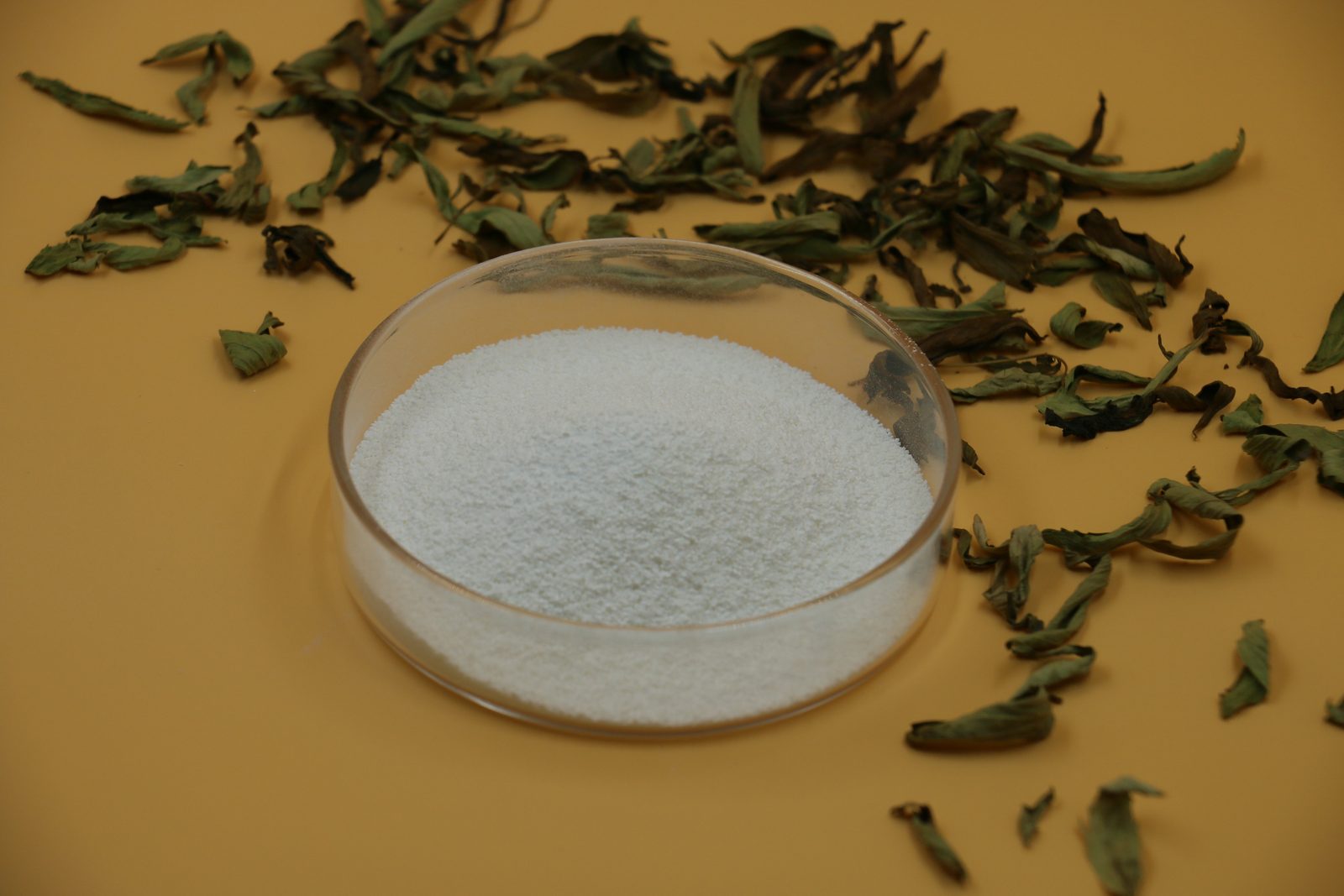
Figure 1 - Appearance tells you nothing about purity. A 90% and a 95% product are visually identical; only the total glycoside figure on the label or COA separates them.
Layer 1 - the glycosides
Total glycosides is the sum of the individual glycosides on a dry basis. It sets the purity of the product; the share of a single component sets its grade. Grade names on the market read exactly these two numbers: ST95-RA60 means 95% total glycosides with 60% Reb A, and RA97 means 97% Reb A. In both cases the percentage is by mass of product, not a share of the total glycosides.
Layer 2 - everything that is not a glycoside
Whether it reads 90% or 95%, total glycosides is measured on a dry basis: the proportion of dry matter that is glycoside. What remains is residue from the starting material plus food-grade processing aids, and it varies with the production method.
For a leaf-extracted product the starting material is stevia leaf, which apart from glycosides also contains polyphenols, polysaccharides, protein and minerals - stevia leaf powder runs about 9% total phenolics on a dry basis, 10.5% protein and 7.2% fibre. Extraction and refining remove most of this, and how much remains depends on how far refining goes: the national standard floor is 90% total glycosides on a dry basis and high-purity grades exceed 95%, which cuts the non-glycoside share from around one tenth to a few percent.
Glucosylated steviol glycosides (GSG) behave differently. Starch is the glucose donor, so what remains outside the glycosides is mainly dextrin and unreacted substrate, not plant polysaccharides and polyphenols. When dextrin residue exceeds 4%, total glycosides must be recalculated on a dry basis with the dextrin deducted.
A mass balance makes it concrete. The standard permits up to 6% loss on drying, so a product at 90% total glycosides (dry basis) with 6% moisture contains, per 100 kg: 6 kg water and 94 kg dry matter, of which 84.6 kg are glycosides and 9.4 kg are other dry matter - mostly leaf-derived organic material. Ash at ≤1% only caps the inorganic part. Lead and arsenic at ≤1 mg/kg, methanol at ≤200 mg/kg and ethanol at ≤5000 mg/kg are ppm-level process cleanliness limits; they do not occupy any meaningful share of the mass.
Layer 3 - fillers
Commercial steviol glycosides are rarely 100% glycoside. Turning a 97% raw material into a declared 95% or 60% grade, or improving flow, dispersion and dosing accuracy, means adding a filler. The standard permits “food ingredients such as starch used for standardisation”, and maltodextrin is the most common: a starch hydrolysate, water-soluble, bland, and neutral to sweetness. Starch and dextrin are covered too.
Some products are blended with erythritol and other sweeteners into a ready-to-use premix. Those are no longer a single steviol glycoside but a compound food additive: the label must state the food additive category and the generic name of each component, retail packs must declare each content, and the permitted uses cannot go beyond the food categories allowed for every component at once.
Judge the active material by the total glycoside figure on the label or COA, never by net weight: 1 kg of white powder at 95% contains 950 g of glycosides, while 1 kg at 60% contains only 600 g.
Primary sources: GB 1886.355-2022; JECFA specifications (INS 960a-960d)
Related products: Reb-A Series · Optimvia Reb-M / Reb-D