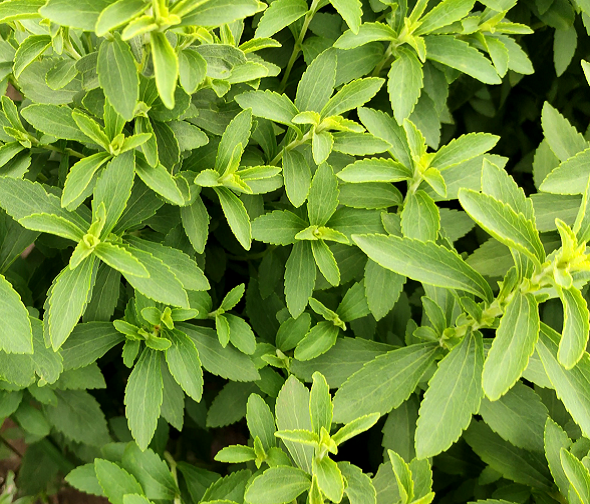
In January 2016 Health Canada added Rebaudioside M (Reb M) to the list of steviol glycosides permitted as sweeteners in Canada. Reb M is one of the sweet compounds that occur naturally in the leaves of Stevia rebaudiana, and the listing mattered because Reb M is the glycoside most often described as clean-tasting. It is authorised for food and beverages under the same conditions of use that already applied to stevioside and Reb A.
After a detailed safety analysis, Health Canada concluded that there were no safety concerns with the sweetener at permitted use levels. For a Canadian formulator the practical effect is simple: Reb M can be used in the food categories where steviol glycosides were already permitted, at the same maximum levels, with no separate novel food notification.
What changed on 15 January 2016
Before the listing, a formulator who wanted the cleanest stevia option had to work with Reb A, or with blends built around Reb A. Reb M existed in the leaf, but only in small amounts, so it could not be supplied as a commercial ingredient at scale.
The 2016 listing recognised Reb M as a permitted steviol glycoside in its own right. It did not open a separate regulatory category, and it did not change the labelling rules that already applied to steviol glycosides.
The steviol glycosides permitted in Canada
A steviol glycoside sweetener may consist of one, or any combination, of the following:
- Stevioside
- Rebaudioside A
- Rebaudioside B
- Rebaudioside C
- Rebaudioside D
- Rebaudioside F
- Rebaudioside M
- Dulcoside A
- Rubusoside
- Steviolbioside
Why buyers ask for Reb M specifically
Reb A is the most abundant glycoside in the leaf and the workhorse of the category, at roughly 200 to 400 times the sweetness of sucrose. Above a certain use level it brings a bitter, liquorice-like note and a long tail. In a flavoured beverage, a yoghurt or a baked good, that note has to be masked, and masking costs money and label space.
Reb M is about 300 times as sweet as sucrose at 5% SE, and its sweetness builds and fades closer to the way sugar behaves. That is why the 2016 listing was read by the industry as an upgrade rather than an addition: it gave Canadian formulators access to the glycoside that needs the least help from flavour modifiers.
Reb A and Reb M side by side
| Property | Reb A | Reb M |
|---|
| Sweetness vs. sucrose | 200–400× | about 300× at 5% SE |
| Purity of standard grade | 95–98% | 95% and above |
| Taste at higher use levels | Sweet, with a bitter, liquorice-like tail | Cleaner onset, closer to sugar |
| Share of total glycosides in the leaf | The most abundant | Present only in small amounts |
| Declaration on a Canadian label | Steviol glycosides | Steviol glycosides |
Ranges above are typical values from supplier specifications. Confirm them against the certificate of analysis of the grade you actually buy.
What it means for labels
- Ingredient list: steviol glycosides is the declaration; Reb M does not need a separate entry.
- Food categories: the approval sits inside the existing permission, so no new category has to be cleared before you reformulate.
- Claims: a sweetener is not a sugar. Statements such as no added sugar depend on the whole formulation and on Canadian claim conditions, not on the sweetener alone.
Canada, the European Union and the United States
Canada works from a permitted list of the ten glycosides above. The European Union authorises steviol glycosides obtained from the stevia leaf as E 960a, and glycosides produced by enzymatic conversion of purified steviol glycosides as E 960c. In the United States, purified steviol glycosides, Reb M included, are sold as GRAS on the strength of FDA no-objection letters. A dossier that satisfies one market is not automatically valid in another, so the paperwork has to be built market by market.
Sourcing Reb M
GL Stevia (Xinghua GL Stevia Co., Ltd.) has produced steviol glycosides since 2005 and runs 2,300 tonnes a year of extraction and conversion capacity. OPTIMVIA RM95 is our Reb M grade at 95% minimum, about 300 times the sweetness of sucrose, supplied with a certificate of analysis, GRAS support documentation, and Halal and Kosher certificates. Samples are 100 g, the minimum order is 20 kg, and lead time is 3 to 7 days.
Product pages: OPTIMVIA Reb M and Reb D, Reb A series. Regulatory and ordering questions are collected in our FAQ.